Johnny Hannah

What is striking to me about Hannah’s work is the way the majority combines illustration with type and letter-forms. With regards to his personal style running throughout his work, it is evident that Hannah is not afraid to experiment with colour which is something that I can appreciate and enjoy when looking at work like this. Not only does he explore how he can combine illustration and type, but he also explores type in itself, with some of his pieces containing many different styles of writing.

A good example of Hannah's work and experimentation in typography

A good example of Hannah’s work and experimentation in typography
http://nonavee.blogspot.co.uk/2010/12/jonny-hannahs-awesome-typography.html

Even his introductory page on his agency’s page has his name at the top in various styles.

Whilst looking through this webpage I discovered more about the agency “Heart” and the clients that they work with. Notable and well known companies such as the ‘New York Times’ and ‘Vogue’

Something which is triggered to me when browsing over Hannah’s vast collection of work, is that for some reason the work boasts a carnival-esque or fairground like styles. I think this impression comes from a mixture of some of the typefaces used and the illustrations.

hannah_lge_02

The typeface at the top of this piece screams carnival-esque type to me

Here the illustration at the top and the mask in the bottom left, plus overall style of the poster are what give me a carnival feel - http://www.heartagency.com/artist/JonnyHannah/

Here the illustration at the top and the mask in the bottom left, plus overall style of the poster are what give me a carnival feel – http://www.heartagency.com/artist/JonnyHannah/

Joel Stewart

The first point of call that I took when beginning research of Joel Stewart was his website, where the homepage already tells me a lot about him. He classes himself as an illustrator and author, and it very in touch with modern social media, as he is a regular blogger and has links to his twitter page.

It is interesting to note, that for the first time since starting this blog, Stewart is the first illustrator I have come across, where their style varies from publication to publication.

From Top Left Clockwise: "Addis Berner Bear Forgets", "Have You Ever Seen a Sneep?", "Dexter Bexley & the Big Blue Beastie", "The Silver Sovereign" (by Eoin Colfer), "The Trouble with Wenlocks and Tree Soup", "Tales of Hans Christian Andersen", "The Adventures of Abney & Teal"All taken from http://www.joelstewart.co.uk/blog2/Joel%20Stewart%20Published%20Work.pdf

From Top Left Clockwise: “Addis Berner Bear Forgets”, “Have You Ever Seen a Sneep?”, “Dexter Bexley & the Big Blue Beastie”, “The Silver Sovereign” (by Eoin Colfer), “The Trouble with Wenlocks and Tree Soup”, “Tales of Hans Christian Andersen”, “The Adventures of Abney & Teal”
All taken from http://www.joelstewart.co.uk/blog2/Joel%20Stewart%20Published%20Work.pdf

You can see evidently from the collage above of some of his work, that his style varies throughout his publications, and although there are some similarities between a couple of them (for example the illustration style of “Have You Ever Seen a Sneep” and “Dexter Bexley & the Big Blue Beastie”).

It is also interesting to note that “The Adventures of Abney & Teal” has also allowed Stuart t branch out into animation, as this also became and animated series. Below is a image from said series.

Taken from the website as the collage above, here is an example of the characters when animated

Taken from the website as the collage above, here is an example of the characters when animated

Shirley Hughes

When I began exploring Shirley Hughes’s work, some of her work and illustrations triggered something in the back of my mind. Although I cannot remember reading any of her publications as a child, maybe I had been exposed to some of her work throughout the early stages of my life. One of the elements of her work which caused this ‘trigger’ was her distinctive style of illustration and some of the characters within her work. Even though the main body of work from S.Hughes surfaced around the 50s and 60s, it clearly has left an impression within my mind for someone who grew up in the 90s, to still recognise some of the work shows the impact that these publications have had on children’s literature.

The style of Hughes’s work has a running theme of colour and rather accurate depictions of young children and animals. There is nothing abstract or obscure about her illustrations, which fit with he area of work rather well, being in publishing for a young audience. The medium by which these pieces of work are created is most certainly paint and ink based, and even though this was probably one of the more popular mediums due to the time period even some of the latest work from Hughes uses the same tools and follows her same style.

Below (courtesy of Amazon.co.uk) is an example of some of Hughes latest work set to be released in August 2013. You can see it follows the same styles discussed, using the same techniques as her earlier publications.

Scott McCloud

Compared to the other pieces of research i have done so far, McCloud’s work stands out because it avoids any use of colour altogether. One of his most interesting pieces in my opinion because of the ideology behind it. The idea that one could create a 24 page comic within 24 hours.

In his 2006 publication “Making Comics” he explain about how he goes about creating his work. He states that initially the ideas are roughed out in pencil however the main bulk of the work is done digitally. He goes in to details of the hardware used, being a computer tablet and also the software that he uses, that being the industry standard Adobe Illustrator to create the letter forms, and then exporting these files into photo shop, where with some publications he has ended up with around fifty layer of work!

Peter Saville

Having not heard of Peter Saville before, I was intrigued to find out more about his origins, work and history. When commencing the research, one word hit me straight away. Psychedelic. He has worked closely with music throughout the 80s designing artworks and sleeves for Factory Records. The initial phases of the research did pull up all his arguably ‘Psychedelic’ work such as the artwork for the albums “Joy3” and “Suede”. However when I delved deeper into his work I can see how wide a variety of styles he has.

As I look through a back catalogue of  work and artwork, it is evident to me that Saville likes bold pieces, and something that clearly makes a statement and provokes thought from an audience. In a lot of work, big blocks of vibrant colours are used, or a mixture of photography edited together with block colours.

Below I have included a video taken from Umbro’s YouTube site. It demonstrates the other aspects of design that Saville has expanded into. Here you can see he has branched out into fashion (granted it is more sportswear rather than high fashion clothes) it is still working with clothes and fabric.  This shows how Saville can apply his skills, expertise and knowledge to a variety of design practices.

Kyle Cooper

Kyle Cooper interests me because during his education he was taken under the wing of Paul Rand, arguably one of the most influential people within the Design community. So I what this impact had on Coopers style and work.

Cooper branched out into motion graphics as his professional career and to my surprise has been the person responsible behind many of the opening sequences to many popular block buster films.

The video above shows a collection of some of his notorious work within film and advertisement. Here glimpses can be seen into some of the work with blockbuster films, such as ‘Batman’, ‘Superman’ and ‘SE7EN’. It also demostrated to me how not only does Cooper specialise in motion graphics for films, but also has worked within the advertisement industry. It is also evident from this collection of footage that Cooper likes to play around and experiment with different ways to display text and see how he can communicate a message in as many different ways as possible.

Below is a collage I created from the video footage emphasising Coopers work with advertisement and more specifically, text and type.

1 Collage

Here you can see a variety of productions such as TV Idents, and a lot of adverts for technology, more specifically imaging devices such a printers and cameras.

Lauren Child

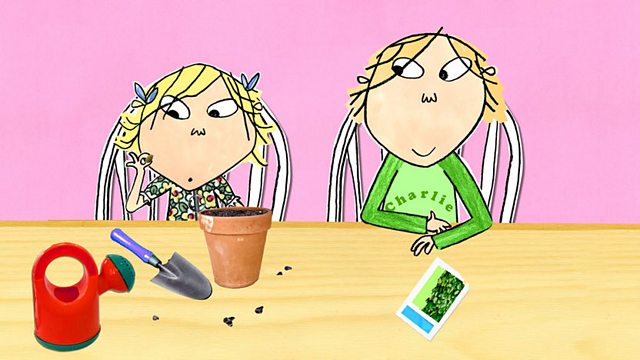
Lauren Child is the illustrator behind the well known BBC Children’s program “Charlie and Lola”. Child has a her own style which is instantly recognisable and unique.

The clip above is the opening title sequence to Childs most recognisable work from Charlie and Lola. Her work is arguably abstract which is could possibly be what children find intriguing and enchanting about the program.

Her other publications such as Clarice Bean, which are a series of Children’s books, follow exactly the same illustration style as the Charlie and Lola series.

The images are below, taken from the BBC and another blog demonstrates the argument this argument which I have just made, you can see even though these are two separate series from Lauren Child, the illustrations are created in exactly the same ways and follow the same styles.

It is interesting to note, that even though it is stated that the first image taken from “Clarice Bean”, is actually aimed at a slightly older audience than “Charlie and Lola”, however used exactly the same illustration style, showing that this illustration style is arguably universal to a wider audience than what I initially anticipated .